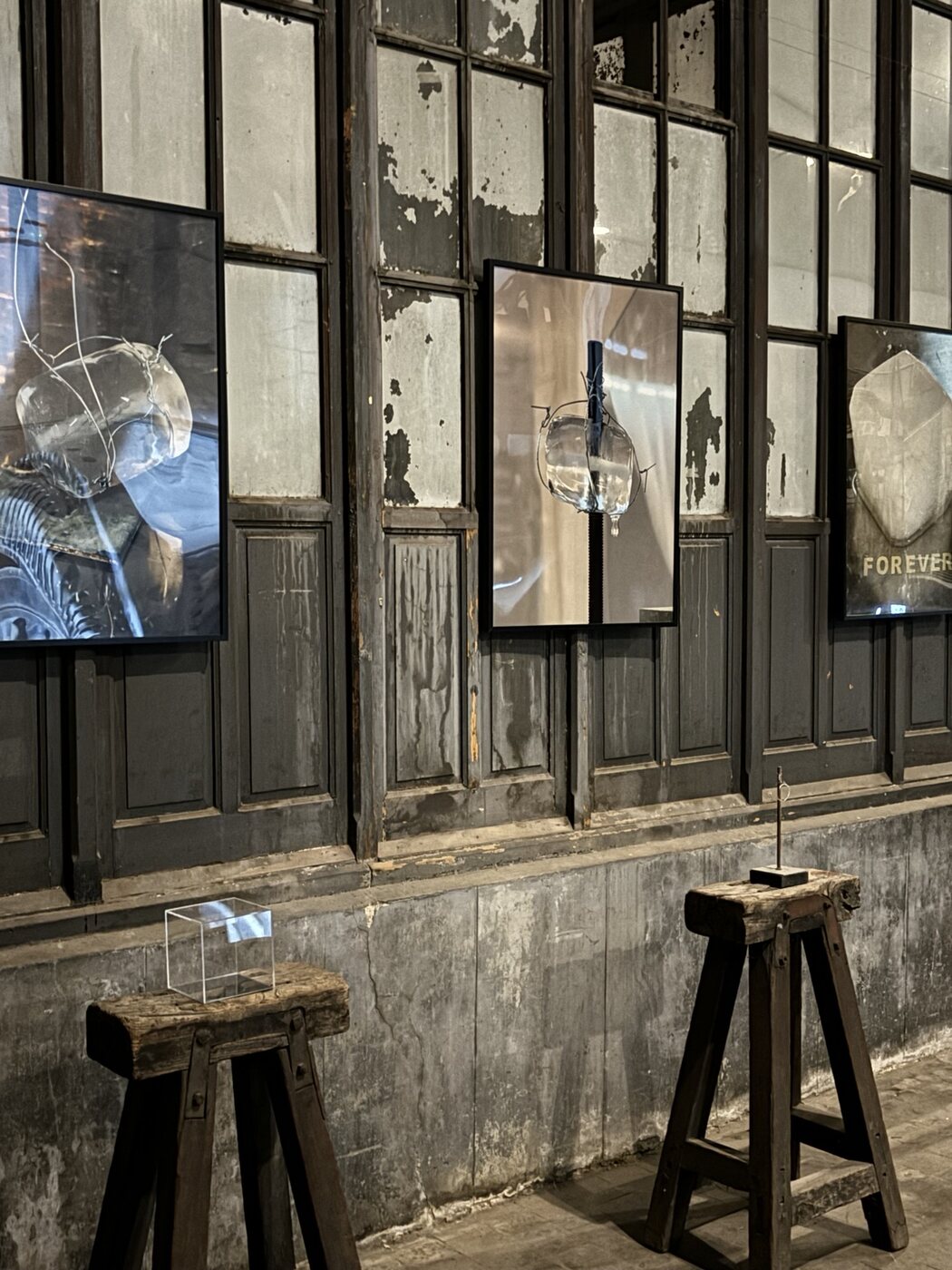
FOREVER
Question: how can an ephemeral material speak of permanence? Production: photographs, ice, iron and obsolete objects meet in an expanded installation. Reflection: I return to the marks and memories of what disappears.
Exhibition recordI investigate art as a form of knowledge. The question begins in making, takes shape through a material process, and continues as I study what the work has revealed.
An ongoing artistic practice · Valencia, Spain
My research begins in the studio. I bring a question into contact with matter, but the material does not simply obey an idea already settled. Ice melts, metal oxidises, discarded objects retain a history. Their behaviour changes the work and changes my understanding of the question.
I return to the work through observation, documentation and writing. That analysis can lead to another piece, another medium or a new question. Making and reflection are therefore phases of one sustained investigation. I call the coexistence of fertile opposites within this process Paradoxia: permanence and disappearance, matter and image, the visible and what remains to be known.
This inquiry concerns the human capacity to make meaning through creation. It joins artistic experience with my research into epistemology, without requiring each work to serve as an illustration of a prior theory.
The question in Inquiry H₂O concerns what a changing material can make us know. I brought ice, water, iron and aluminium into a temporary relationship. Melting and oxidation altered the surfaces; the photographic image carried another state of the event. The work developed through the duration and consequences of that encounter.
I studied the traces left by the process and how an image changes what we can remember of it. Inquiry H₂O was selected by Demetrio Paparoni for the main exhibition of the 2026 Water Biennial in Cascais, at the Estoril Congress Centre.
I understand the creative process as a form of living knowledge. I begin with a question, work with materials and return to what happens during production. The unforeseen part of the process matters. It can give the work a direction I could not have described before making it.
In Inquiry H₂O, I approached water as an active material. Ice formed a temporary body; as it melted, water came into contact with iron and changed the surfaces around it. The central material disappeared while its action remained visible. The photograph is another state of this inquiry: an image through which the event can be considered after it has passed.
I examine such changes through observation and documentation, then write and speak about the questions they open. That reflection enters subsequent works. In FOREVER, ephemeral matter and discarded technology return me to time and the desire for permanence. Golden Rice brings my attention to food, value and the conditions of life. My practice develops across these encounters. Each work is a question made with the world, and the analysis of its process becomes part of the next question.
These projects provide context for the ongoing practice. Their exhibition documentation can be explored through the selected works and TRACES.
Question: how can an ephemeral material speak of permanence? Production: photographs, ice, iron and obsolete objects meet in an expanded installation. Reflection: I return to the marks and memories of what disappears.
Exhibition record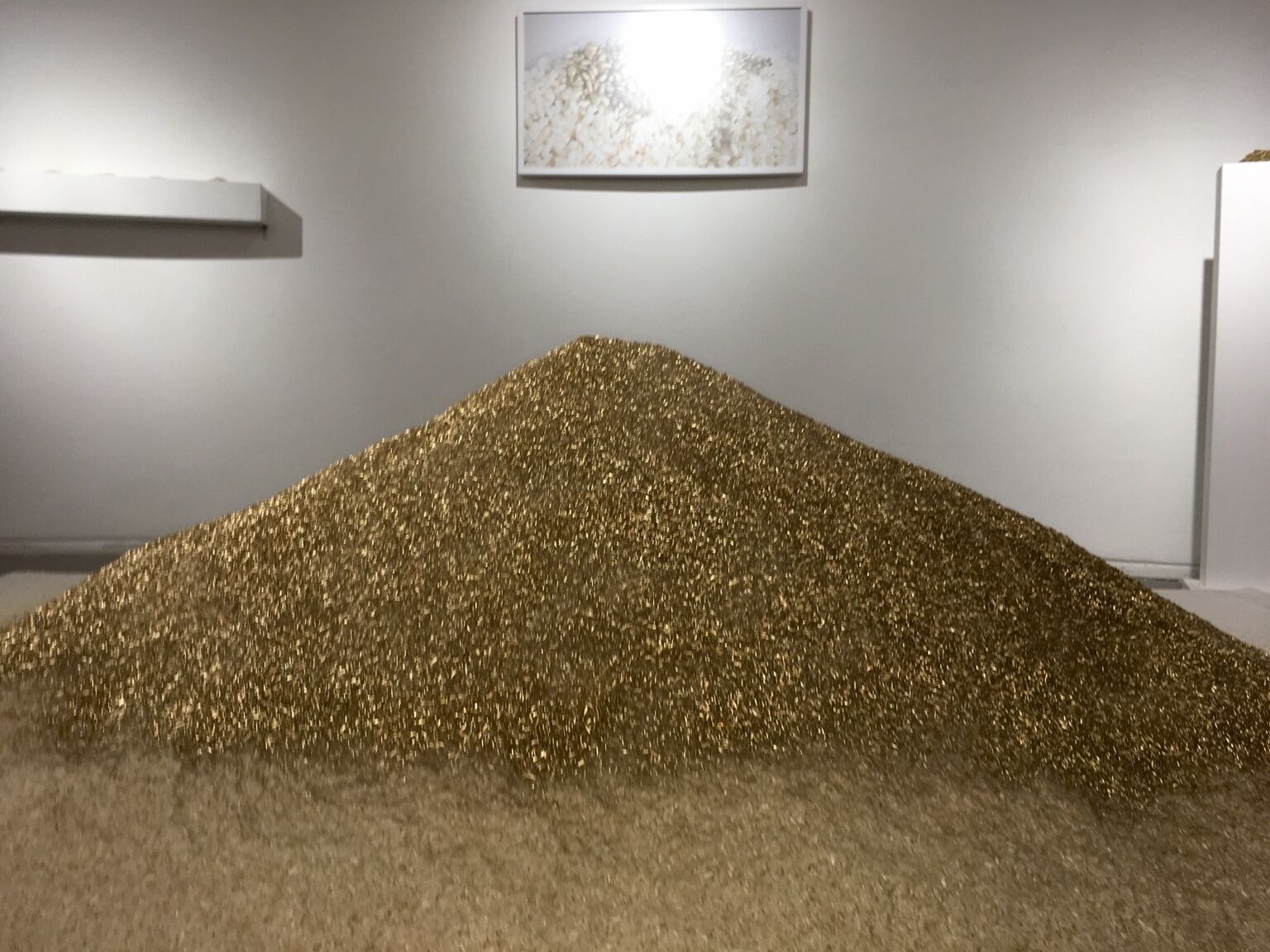
Question: what do food and biotechnology reveal about value and dignity? Production: the material is assembled at an installation scale. Reflection: the encounter connects the image and the substance to conditions of life.
Selected worksI am José Cosme, a Spanish conceptual artist and researcher born in 1968 and based in Valencia. I hold a PhD in Fine Arts and direct the Chair of Art and Technology at the Universidad Católica de Valencia, where I teach epistemology. My artistic practice develops alongside my research into the creative process as a form of knowledge.
I work through installation, photography, video and actions, bringing material experience into dialogue with questions about the human condition. Water and ice, iron, aluminium, discarded objects and technological devices enter my work as materials through which thought takes shape. I understand artistic creation as a way of knowing through doing, in which intuition and lived experience remain essential.
My exhibition history includes Ser y Huella at IVAM in Valencia in 2013, El Todo y la Nada at the Museo de Arte Contemporáneo de Bogotá in 2018, and FOREVER at La Neomudéjar in Madrid in 2024. In 2026, Inquiry H₂O was selected by Demetrio Paparoni for the Water Biennial in Cascais, where I also served as Academic Director of the Biennial.
My website and the TRACES archive connect these works with research, critical writing and documentary sources. My ORCID identifier links this artistic identity to my research authorship, allowing the practice and its publications to be followed together.
TRACES is the documentary continuation of my artistic practice. It connects artworks with exhibition histories, critical writing and external references. These records allow viewers to follow how a question reappears in another material or context. Alongside the archive, my ORCID identifier establishes a persistent link to my research identity. Preprints.org and the repositories linked from my website provide access to publications and research materials. Together, these resources enable a reader to trace the relationship between a work, its public history and the written research that develops from artistic experience.
Exhibition records, critical writing, historical documents and external sources.
Persistent researcher identifier: 0000-0001-7662-5611. A link between artistic identity and research authorship.
Research preprint, 2025. This version has not been peer reviewed.
Institutional research profile at the Universidad Católica de Valencia.
Search the repository by my ORCID identifier.